Recently, I read an article, published in a left outlet, about the possibility of a desperate US and Israel using nuclear weapons against Iran. Sadly, and embarrassingly, I don’t recall the publication and, after I read, I closed the browser tab before sleep, failing to note the link (which is unusual for me, a man who tries to support statements with evidence).
When I find the reference, I’ll update this essay.
Back to the article.
As the author describes potential situations, material realities and tactical/strategic limits, but also, the effects of nuclear weapons noting, for example, the number and type of devices that would likely be required to destroy Iran’s ability to counter-strike and the consequences: both in human and geopolitical terms (a solid, and detailed consideration of the consequences of nuclear war is found in the book, ‘Nuclear War: A Scenario by Annie Jacobsen’), they pause to provide a brief history, and description, of these monstrous devices.
That pause was necessary. Today, in the supposedly post Cold War era, the history and nature of nuclear weapons is not well known outside of specialist circles. Christopher Nolan’s film, ‘Oppenheimer’, despite all the to-do, only scratches the surface (to be generous).
Among the most detailed tellings of the story of how atomic weapons were created, and the thermonuclear weapons that came not many years after their horrific use, are two books by Richard Rhodes, ‘The Making of the Atomic Bomb’ and ‘Dark Sun: The Making of the Hydrogen Bomb’. Here are pictures of my copies of the books, from my shelves:
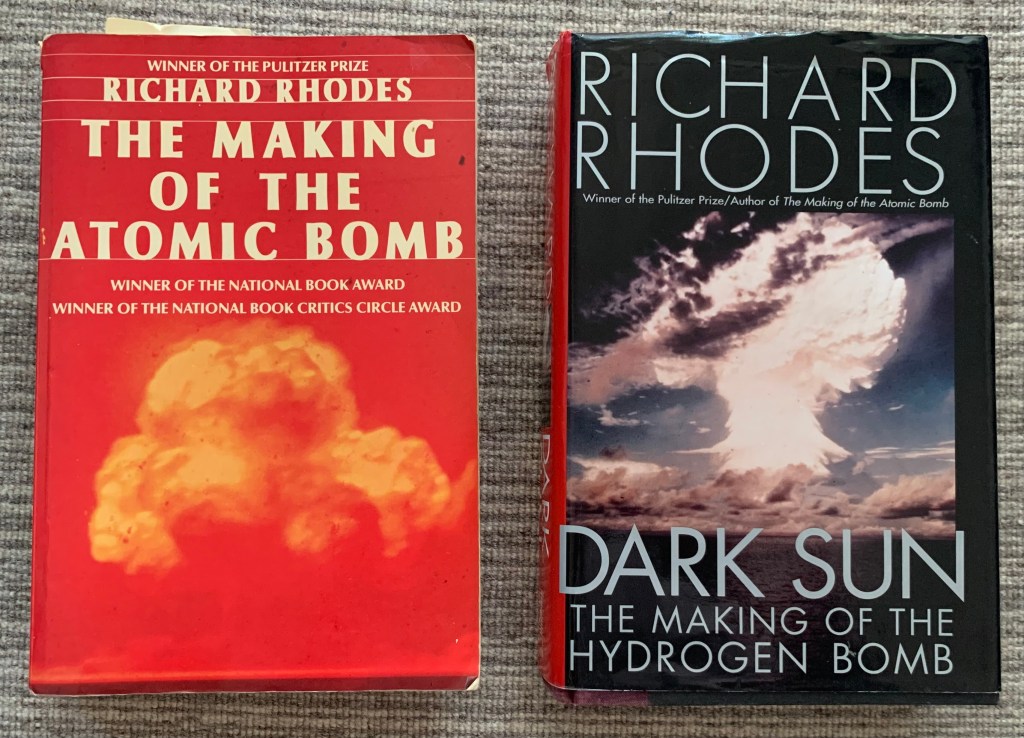
Both books are very rich in detail: scientific, biographical, political, etc. It’s difficult to pick an excerpt that conveys this richness without seeming taken from its full context. Let’s settle then, for the opening paragraph of ‘The Making of the Atomic Bomb’:
In London, where Southampton Row passes Russell Square, across from the British Museum in Bloomsbury, Leó Szilárd waited irritably one gray Depression morning for the stoplight to change. A trace of rain had fallen during the night; Tuesday, September 12, 1933, dawned cool, humid and dull. Drizzling rain would begin again in early afternoon. When Szilárd told the story later he never mentioned his destination that morning. He may have had none; he often walked to think. In any case another destination intervened. The stoplight changed to green. Szilárd stepped off the curb. As he crossed the street time cracked open before him and he saw a way to the future, death into the world and all our woe, the shape of things to come.
[…]
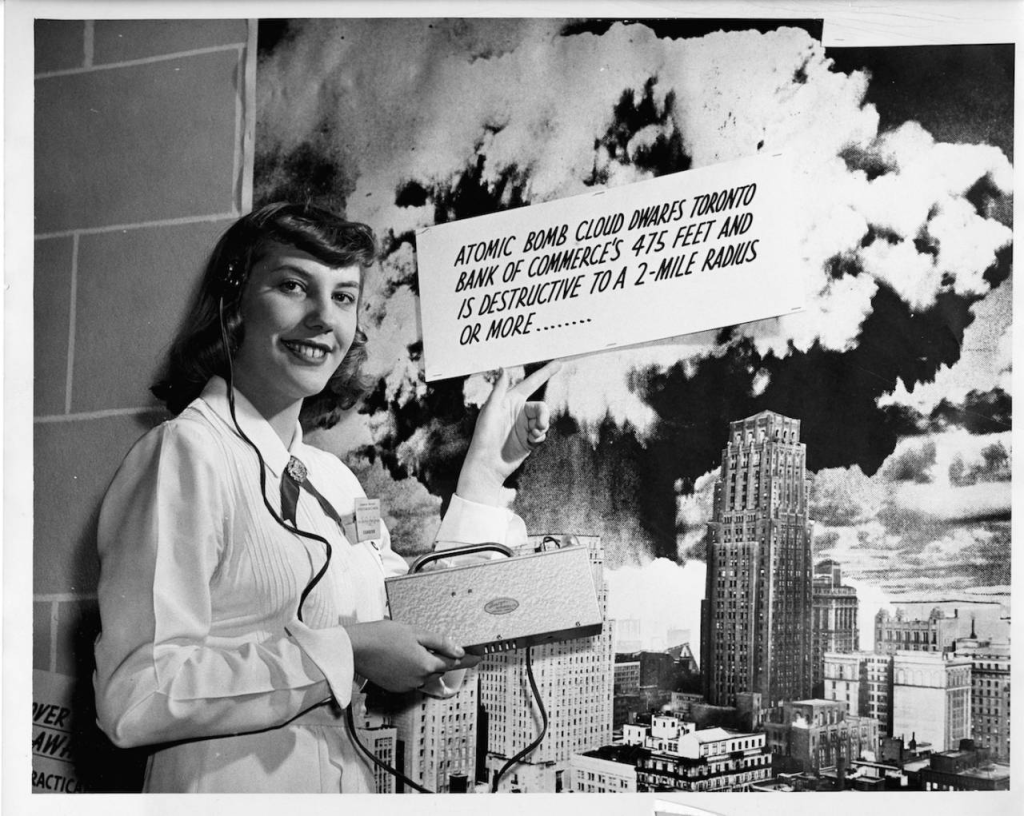
It was once common to call the immediate post World War Two period, the atomic age (as in, atomic age film) as if it’s all in the past, left behind. The weapons never went away and the danger never passed; in fact, it has grown. We live as much under the threat of annihilation as ever. Indeed, this is one of the most dangerous periods of my lifetime: a dying empire, clawing and striking to hold onto power as history moves on.
It’s important then, to resurrect the sense of dread, inspiring action, that energized some of our ancestors who, in the 1950s and 60’s worked to eliminate the threat to all of us of nuclear weapons (a sense of dread Hollywood worked to neutralize as told in the book, The Beginning or the End: How Hollywood–and America–Learned to Stop Worrying and Love the Bomb by Greg Mitchell).
Plutonium, a key element in the operation of nuclear devices will, sadly, be with us for eons of time, an artifact of a mad age that future historians, ideally, will be around to puzzle over.. We cannot expect the same is true of the devices the element was created to power.