When I am not compelled by my writing and left to my own devices, my literary tastes tend to be reactionary–to continue the misuse of this common insult. I like older books: Herman Melville, Aldous Huxley, Oscar Wilde–well, I will skip this tedious dick stroking and say that the last book I read (willingly) and enjoyed was Will Self’s ‘Dorian: An Imitation’, published by Viking Press in 2002. Writing this, I know I leave myself open to my enemies in the camp of the Philistines and the Puritans. ‘You don’t read this absolute garbage? Well, how do you know it’s garbage?’ I know it the same way that one knows a dog shit in their yards–there will be flies around it.
When one takes a look at the books out there ‘on the market’, one sees enough flies to feel the need to call an exterminator–and to realize a stench of rot is not far behind. Who is out there? Some will point to Sally Rooney, yammering something about her admirable political stance. I am serene on this; the politics of the author has no bearing on the aesthetic quality of their books–even if their book was a ‘straight to TV’ book, as was the case with “Conversations with Friends” and “Normal People”. This point goes both ways–just because a book has been made into a show or is popular does not mean the author is bad. But I must demure slightly–I believe it is the case that all books that are adapted into great TV (either as shows or as cinema) are always bad books. The codex and the screen are different mediums; the sign of a good book is its ability to use the techniques of that medium to express itself. If a book works better as a movie, a whole other medium…I can see you are upset, let us move on.
Beyond Rooney, one finds themselves surrounded by an oceans worth of micro-plastic gimcrack from the likes of Stephen King, J.K. Rowling (whisper her name), Rick Riordan, or to add some of the currently ‘popular’ writers I have had shouted at me, like Sarah J. Maas, Ginny Myers Sain, or Grady Hendrix. These ‘authors’ write the kind of books that ought to lining the end displays of grocery stores, sitting right alongside James Patterson or Tom Clancy, where they can be bought as last minute gifts that are assured to disappoint whomever they are bought for. They are the books that help the chronological uninspired woman spice up her dull marriage, while offering some prognathous jawed man the jolt of power he longs for (if only I had Greek Gods as parents!) before such a book meets its true fate: being a door stop. I would call them slop, but even slop offers nutrients to the pigs that feast on it. What do these books offer us?
Of course, one can turn to the aging writers of yesteryear–Zadie Smith, Martin Amis, Claire Messud (sure, you can read her husband too, I guess–he’s been dead since Harold Bloom murdered him in 2008), Toni Morrison, Will Self, Haruki Murakami, Philip Roth, Don DeLillo, Chimamanda Ngozi Adichie, Thomas Pynchon (to be recent) and…well…if I do not end this list here, I will have to end myself. These are great writers, but as time marches on, we march further and further from their influence and further towards a need for us to make something out of their great works. We have to write the literature of the next era, and yet we have…gimcrack–and Sally Rooney.
All of this is marvelously absurd–and it makes sojourns into ‘contemporary literature’ akin to voluntarily asking to be waterboarded. When a friend offers me a book, or sends me one of their links, or I am advised that ‘if you review this book, you will get a lot of fans’, I wince like an abuse victim hearing the keys in the door; I expect pain. I used to give it a go, and come back with a grimace, uttering that ‘while I understand you like it…’ before explaining that this book is many things, but it is not literature. And thus, a fight ensues, and so now I wave all such requests away, shouting like an old man from my lawn: ‘These damn books these days!’
But in these pages, I am compelled: and being so, I was compelled to read two books by up and coming authors, or so it has been explained to me. The books? The Face of Pluto, by the scholar Ansgar Allen and Abraxas 2000 by Jon Spiegler. And I am happy to report that I did not even have to get my hair wet reading these.
I
This review is an interesting one, as I do not think I could have picked two books that are more different than the ones I am reviewing here. The Faces of Pluto is an experiment in literary form–what would happen, the author seems to ask, if you wrote a book full of casual fragments, instead of a book of events with a narrative and characters? And yet, Abraxas 2000 does not ask the audience a single question; it thrusts the reader into a world and tells them, sternly, to pay attention. Focus! It is not an experiment itself, but a book about experimenting–be it with drugs, the occult, sex, or photography. This is, perhaps, the only theme that can place these books under the same review: experimenting.
But let’s not get ahead of ourselves. What can I tell you about these authors? Well, let us begin with the scholar–I use this word because Ansgar Allen personifies this word in a way most can only pretend to. Living in Sheffield, Allen is the author of sixteen books and a slew (yes, the right noun) of journals, articles, and essays. The editor-in-chief of Erratum Press and co-founder of Risking Education, Allen is an interesting figure; in a world of people whose greatest ‘intellectual achievement’ is having a podcast, Allen is a throwback to what was once called an ‘intellectual’–someone who writes, discusses, and works towards an intellectual purpose. Or, to poke a little fun and appropriate Terry Pratchett, he is clever enough to find a job with no heavy lifting. Allen has not only avoided the pod people and their nonsense, but has striven to reimagine our world. This is no mean feat, given he is reimagining a world for our ridiculous species–a species notoriously unimaginative.
This is not the first time, I will admit, that I have come across the work of Ansgar Allen. I have read both Cynicism (2020), his short and delightful history of the Ancient Cynics and their modern mutations, and his book Black Vellum (2023). I have reviewed both of these, with no need to be compelled. Both were very interesting, even if the latter book went a little over the head of this critic. But I was willing to wade neck deep in that pool of philosophic fiction because I have come to find Allen to be, if not always fully comprehensible, always interesting as a writer with a prose I envy.
The other author is Jon Spiegler. He is a writer from Brooklyn, New York and this book I am reviewing, Abraxas 2000, is his first book. He is a brave author, offering his book to my rather critical eye–he has, after all, read my reviews for the last several years. I admire his bravery. His book has been published by Olympia Press, a publishing house based in London, boasting publishing houses in the United States, the UAE, and India as well. It purports to be an independent publishing house, with a ‘hybrid publishing model’. On its site, one can find Jon’s name among its authors (many of whom I do not know), with a simple biography:
‘Jon Spiegler was born in New York City in 1986.’
Simple and enigmatic–perhaps he knows where Thomas Pynchon is? After all, he was in New York in 1997, and Spiegler’s book is about…oh, fine I will put the yarn and thumbtacks away.
With our authors now so aptly placed before my critical eye, I set my prose to foreboding music and begin–how about something from Jon Cleary? After all, as far as these authors are concerned, I might be in the shadows, the devil they don’t know.
II
From the shadows, let us do this ordinally and start with Ansgar Allen’s The Faces of Pluto. As I closed this book, peering at the title, I sneered a bit. ‘More like ‘The Many Faces of Thomas Browne’, I thought to myself, remembering vividly the many, many references, asides, and quotes from that obscure English polymath and mystic. While the back of the book does say there are references ‘[f]rom Empedocles to Borges, from Thomas Browne (sigh) to Herodotus and back again…’, I found myself trusting less and less this claim as I got closer and closer to the end. While Herodotus, Empedocles, and Borges make appearances, the author mentioned most in this book is Thomas Browne. Between the quote at the front of the book, the first mention of Browne on page 18 to the last mention on page 253 (of a 260 page book), Browne dominates this book. Hence, dear reader, the sneer: The Faces of Pluto? On every white page, I see nothing but Browne.
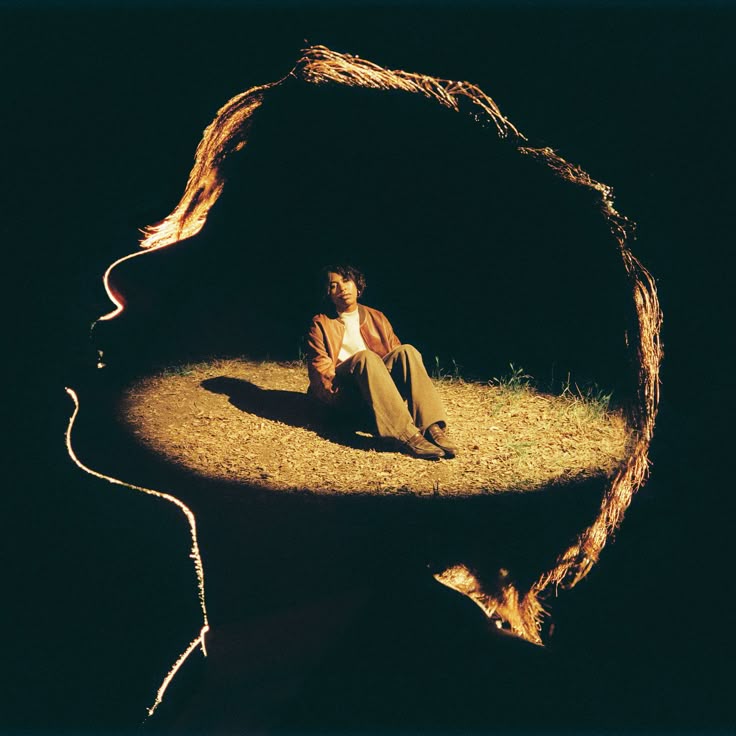
I turned the book over to its front and found myself harboring a deep sense of conflict over what I thought about this book. I could not put my finger on what that was: after all, the book is infinitely interesting, with various fragments that stood out to me. Between page 128 to page 136, there is a fascinating reference to hermaphroditism and how it constantly crops up in history–including a reference to my most favorite of Greek mythical figures, Tiresias. One also falls in love with its prose: while it is guilty of an addiction to the freight car sentence, when it behaves itself, one is pleased with its clarity.
But as I held it in my hands, staring mournfully at its beautifully dark cover, I found my deep sense of conflict becoming a pang of…what? My first thought was that of Byron after a night of drinking–liver? I eyed my pilsner suspiciously–it was only half drained. I entertained any number of reasons for this foul feeling: I checked for monsters in the closet, called my ex to demand she take the pins out of the voodoo doll, and invited a holy father to come bless my house. With all of these offerings exhausted, I was still quite foul, kicking children on my way through the store and punching a Salvation Army worker. Why, I thought, was I in such a mood? I sat down with the book again, and in the dim light of the Bible I set on fire in my fit of misanthropy, I saw the problem:
The subtitle of this book says ‘Novel’.
Novel. Is this book a novel? It seems stripped of parts: characters? There is a man in a hollow, a man submerged to his waist’ (same person?) a woman met out on the brow of a hill near a barrow, a man with matted hair holding a Thomas Browne book (what else?) and an unnamed ‘I’ who is referred to every now and again. A narrative? One is not quite sure–there are long passages in which someone (the narrator? a random consciousness? I re-read several pages assuming I missed a transition) is reading various tracts and giving an opinion here and there. Any events? A few, like when the mysterious consciousness takes a walk and runs into the aforementioned man in the hollow, or when he (she?) remarks on all the books sitting in their library, some bound in human skin. But again, one is never sure, truly, why these are mentioned or how they even relate. While I am not one of those plot point kids who want everything to have an objective, I wondered what exactly this book was novelizing. The lonely mind of a monk? The incredible hallucinations of a wanderer?
The unfocused narration and brilliant prose of this book made me think of Laurence Sterne’s equally airy Tristram Shandy. This comparison gave me hope, but by the end of a second reading of this book, this hope had failed me. Even Sterne’s brilliantly narcissistic and myopic Tristram gives us events and pieced together narratives in between his digressions about theories of hobby-horses and a story of the king of Bohemia–and we follow various named characters and their lives. In Ansgar’s The Face of Pluto, between the gospel of Thomas Browne, the digressions and the man in the hollow, nothing is ever established as a narrative. One gets the feeling that this book reflects the imagination of a graduate student who, having fallen asleep, begins integrating the lecture of his monotonous professor into his dream. He is trapped in a world of academic jump scares, where everyone is reading Thomas Browne, and when he attempts to escape, he finds himself caught like a fly in the endless web of an academic syllabus.
I do recommend this book to others–it is unquestionably erudite, with prose that rivals great prose and gloomy stylists like Arthur Schopenhauer and Thomas Bernhard, a tradition Ansgar is firmly established in. One can become enchanted by the digressions, quotes, and opinions of the mysterious consciousness. One even appreciates the experiment taking place here, harkening back to Arthur Schopenhauer’s declaration, in The Art of Literature that ‘[a] novel will be of a high and noble order, the more it represents of inner, and the less it represents of outer, life…’
But it is an experiment that fails, I think. I say this because, as I considered the confusion I felt, I considered the very next declaration that Schopenhauer states: ‘the ratio between [inner and outer life] will supply the means of judging any novel…’ And Ansgar Allen’s experiment leads him too far into the inner life, with too little outer life to be seen.
I do recommend this book–unless you are seeking to read a novel.
III
And now, onto the newcomer and his debut, Abraxas 2000. When I got to the end of the book, I back tracked–part of the trade that is literary criticism is that one goes back through the book, once finished, and reads their marginalia. I had many thoughts: where’s the narrative? is written irritably on the third page, while half throughout the book, I answer myself and state ‘I am quite lucky there is no narrative in this book’. As I read this conversation I had with (at?) this book, I noted two names that came up consistently: John Dos Passos (sometimes scribbled as JDP), Christopher Isherwood and Theodore Dreiser are three names scrawled in many of the margins. From the New Years Eve drug party at Hilaria that begins the book to the dismembering of Verite’s body at a ritual dedicated to Jehovah, I was reminded of these realists of yesteryear. The prose starts flat but develops into a shape much like the ‘camera’ style of Isherwood’s A Single Man, with every event presented from the perspective of a near-invisible roving photographer, moving among the other characters, their drugs, their hedonism–their sins. A sin eater with a camera that never shuts off. And yet, this photographer is very often interrupted with bits of interviews here and there–the sort of cut to an ‘expert’ that one sees in History Channel documentaries…or, for the literary folk like me, what one finds in the character studies John Dos Passos’ Three Soldiers (1920) or, later on, in the random pastings of newspapers in his novel Midcentury (1961). And, as the book gets going, dragging the reader from room to room, guest house to guest house, abandoned building to crowded basement, one sees the unflinching description and depictions that seem to reference Theodore Dreiser’s Jennie Gerhardt (1911) and An American Tragedy (1925).
The book follows the activities of many people; or, rather, stalks them. I know people expect for me–and the author–to set upon only certain characters. Who is the antagonist? The protagonist? Spiegler refuses this particularly time honored technique, one favored since at least Henry James. One starts by meeting Amanda and Saul at a New Years Eve party, before seeing an interview with a Morgan Gold, who gives way to Claire Labas, Lexie G Hinnon, Joanne Pardes (my personal favorites of all the stalked prey), with intermittent interruptions from a Jacque Anzu, followed by Helene Asher, Maria Grim, Marina Jay, Britney Rose…and so, so many others. The reader is liberated from being stuck with one mere perspective, without being hoisted to the heights of YA’s soft omnipotence–one might recall how psychoanalyst Wilfred Bion admonished patients, saying ‘What a shame it is that you have been reduced to omnipotence.’ Spiegler never reduces himself to this omnipotence–he holds the camera steady, he stalks his characters, and he keeps us at ground level. The wide saucer eyes, the bumps on keys, the occult ceremonies, the constantly ambulatory pace–from tragedy to tragedy, Spiegler’s prose carries an energy that births literature.
Does this book have flaws? Of course it does–as all first books do. The energy of the prose does not always hum. Sometimes, it sputters, often when dialogue is introduced. From page 24:
‘Check out the breeze from the kitchen window, it’s silver!
Helene asked, “What is the word?”
Joanne answered, “Hermes.”
“What is the password?”
“Mercury.”
“What is the word?”
“Lemuria.”
“What is the password?”
“Atlantis.”
They volleyed back and forth until they floated to the ceiling.’
I found myself, too, being volleyed–I knew how a pinball felt when, being smacked back and forth, I went head first into the plaster sides instead of through the bright lights. One follows the words, and is suddenly ‘floated to the ceiling’. Why am I up here? Before you know it, the energy returns and you are off to the next place–or, in the case of this scene, mesmerized in the smoke of a spontaneous occult jubilee.
I am also aware that this book has a lot of ‘she asked’, ‘he said’, ‘they replied’–it is an understandable tendency in a first book, but it dampens the energy of the prose. My overall advice to the author is the avoidance of this–if a character speaks, don’t let them “say” or “reply”, but pick a better adjective–if it absolutely cannot be avoided. I would also suggest, dear author, that as much as I admire the interviews in this book, they should seem more like interviews and less like demotic asides to…well, one wonders. I am, unfortunately, quite old fashioned and like a nice narrative, and felt the interviews going on in this book could make for that narrative, however skeletal.
But who knows? Perhaps these interviews are the basis for the next book…no matter, I await this next book with eagerness.
IV
The trouble with American literature these days, if one can call it that, is that no one loads up a shotgun and chases our writers down the hallowed halls of culture anymore. This is the job of the literary critic, to drive our writers to seek perfection and excellence in their work. It is also their job to drive away what Gore Vidal called ‘literary gangsters’ and the ‘hacks of academe’–the former seeking mere notoriety for shitty opinions and the other seeing literature as grist for their mills of moonstruck theories.
Unfortunately, in Freedom’s Land and Bravery’s home, the literary critic is a near extinct creature, hunted down with fury. Between the Konzertmeisters of kitsch and their mass audiences who despise any and all criticism (or the standards they rely on), the literary gangsters who call themselves ‘reviewers’ or–sigh–‘cultural critics’ who are pretenders, and the literary ‘theorists’ who grind up literature in the name of their moonstruck theories, the hallowed halls of culture are crowded with vagrants.
Sitting down to write literary criticism always comes with a cartload of doubts. You often ask about minutiae like ‘who, exactly, am I writing for? How am I going to begin a piece on a story–or a person–that no one seems to know? Why is my office chair so wobbly? Are the Mormon missionaries at the door again? Was that crashing my cats or am I being robbed?…’ Eventually, every doubt begets doubt until one gets to the main doubt that plagues all writers.
What is the point?
For myself, I don’t usually have these doubts: we Missourians have evolved thick skulls so that we might survive the incompetencies of the KCPD. Mix this with my usual arrogance and my natural tendency towards skepticism, and I am usually fortified against these doubts; I am always saving my doubts for the local politicians or police or…are the damn missionaries at the door, again? But even a constitution such as mine can, in the dark of night or the quiet of the morning, fall for such doubts every now and again. And, when all the usual American cures for such doubts–reality TV, patriotism, Church, a McDonald’s happy meal–have been worn down and exhausted, I find myself turning away from my American cures. I have a foreign (gasp) one: a story about the always grumpy, always venomous Karl Kraus, Austrian satirist and Frankfurt object of obsession. The story goes like this:
In 1932, Viennese composer Ernst Krenek heard about the Japanese bombardment of Shanghai. One wonders what he thought, but one knows what he did–he went to meet the famous journalist Karl Kraus, editor of Die Fackel and lone critic of all parts of a languid empire. This sounds like sticking your hand in a pit of snakes; everyone at the time knew of Kraus’ famous venom. And nevertheless, Krenek went to find Kraus, and upon finding him found the old snake coiled up and absolutely absorbed–not by the bombing, but by one of his infamous ‘comma problems’.
Krenek was nonplussed. Or, at least, concerned enough to question this activity. What difference did it make? What was the point? However he phrased his refrain, Karl Kraus responded with the following:
‘I know everything is futile when the house is burning. But I have to do this, as long as it is at all possible; for if those who were supposed to look after commas had always made sure they were in the right place, Shanghai would not be burning.’
For a hick with delusions of culture like myself, this is comforting–and helps me adjust to the heat of the burning house I sit in, with its reality TV shows and Doordash peasants. After all, if the people who were supposed to look after literature and its criticism had done their jobs right…but they haven’t. So let me declare, now, that with this review so written, these authors so praised and condemned with my hunting and pecking type, I have decided to care for the hallowed halls of culture in this land of the shoplifter and charlatan, of literary gangster and hacks of academe, of Puritans and Philistines.
The shotgun is loaded, and with this review of these two fine authors, my stalking continues.

 Verdigris
One response to “How to Experiment with Commas: A Review of Abraxas 2000 and The Faces of Pluto”
[…] own Henry Simmons reviews new works by Ansgar Allen and Jon Spielgler and in another essay, turns his attention to the ways stupidity, an understudied and misunderstood […]
LikeLike